RSS Feed
|
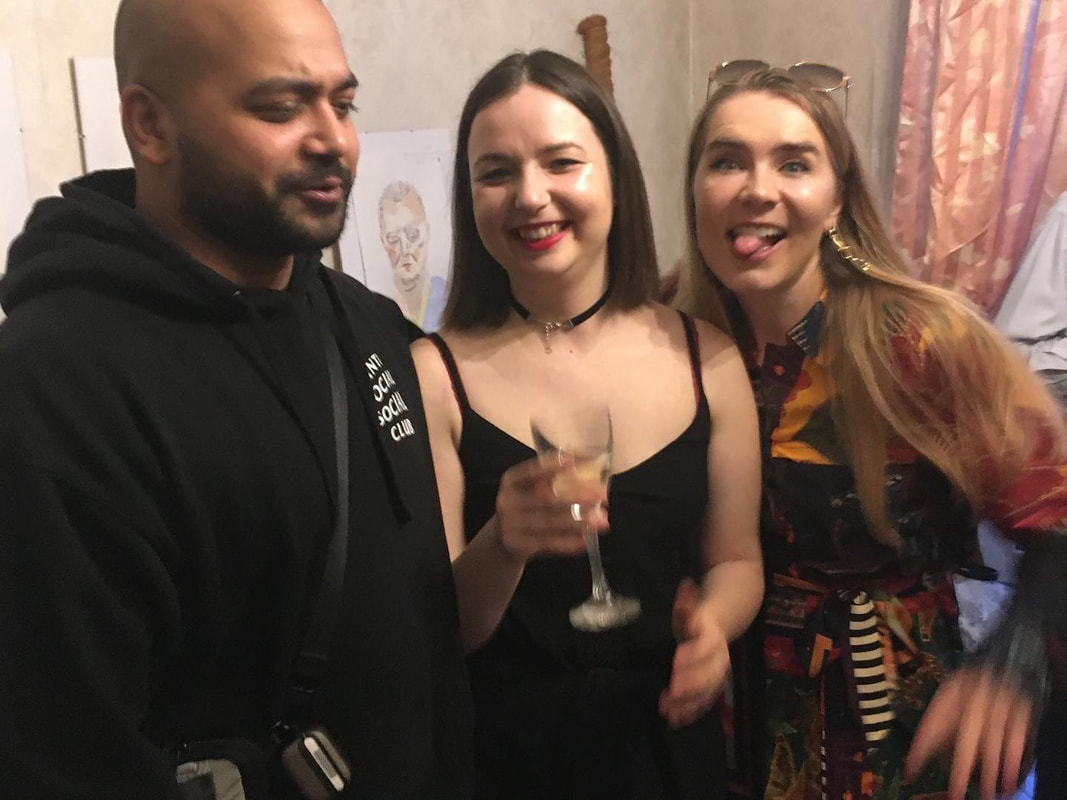
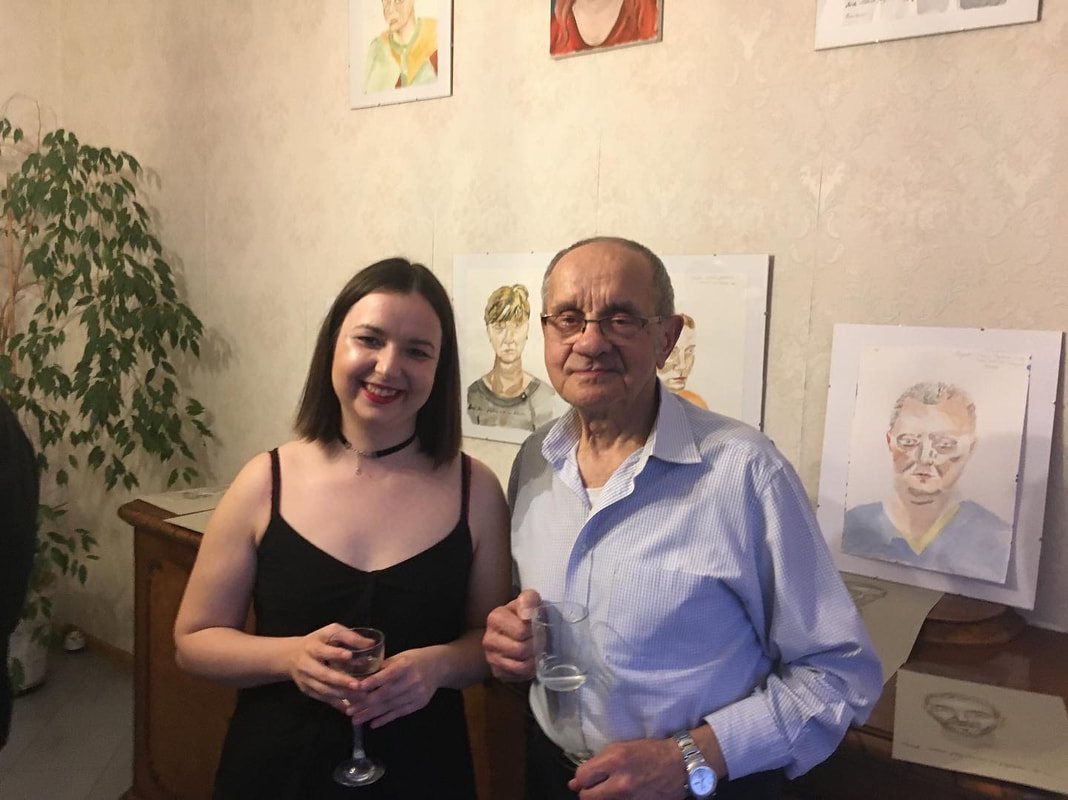
(English below) Pomimo wielu prób sabotażu wernisażu i mojego zdrowia przez różne siły, poznanie ludzi zainteresowanych moimi pracami, tym razem z publiczności było bardzo satysfakcjonujące i czymś dla mnie nowym. 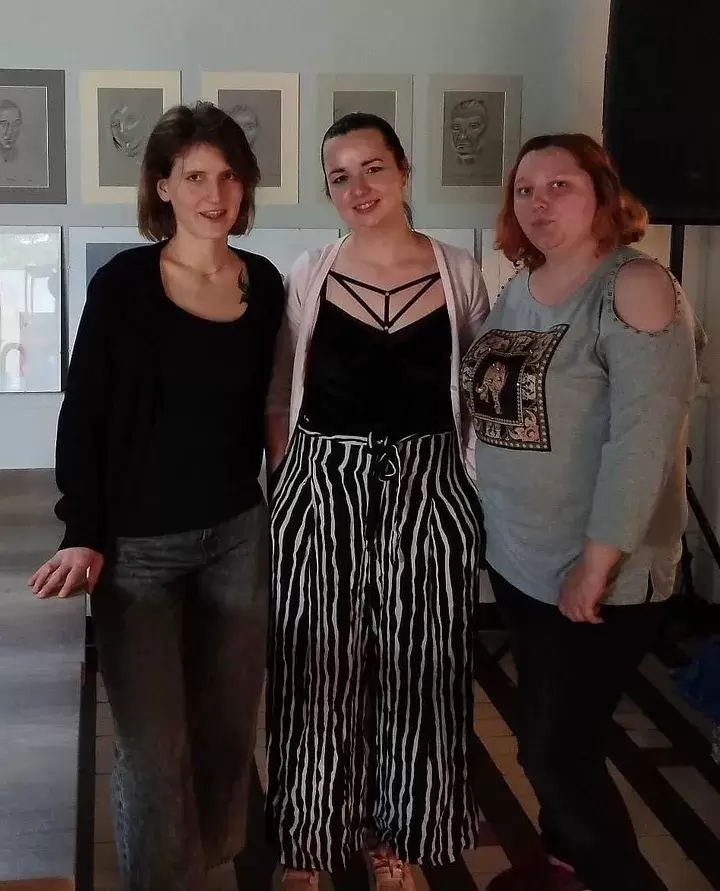 Zgodnie z planem prace sprzedane kolekcjonerom cyfrowym, były pokazane większej publiczności. 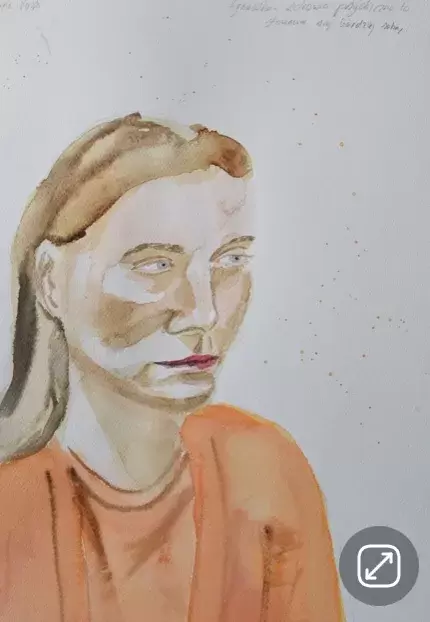 Bardzo podobała się ludziom ekspresyjna forma portretów i emocje przez nie pokazane. Kilka prac z cyklu „Stany Umysłu” były popularne, szczególnie te: 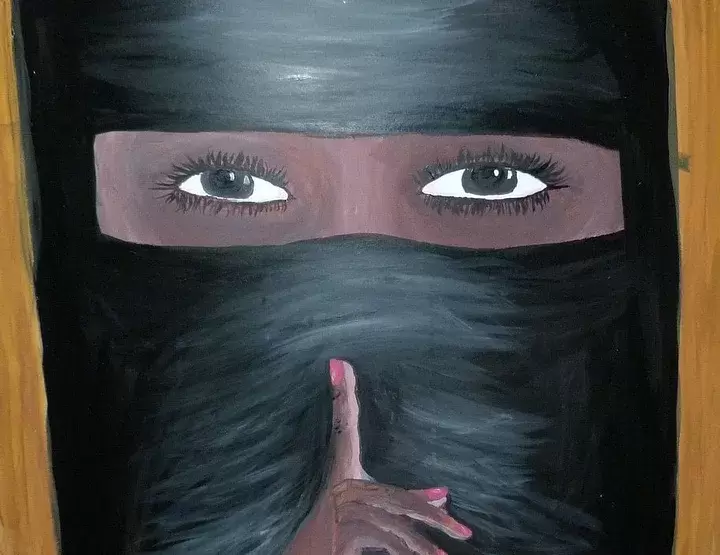 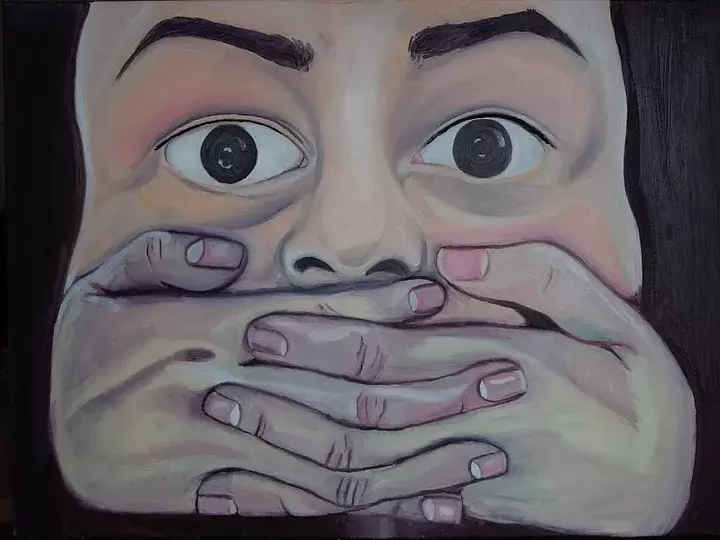 Cieszę się, że wystawa była intymna I nie wzbudziła kontrowersji. Na sto procent była sukcesem. 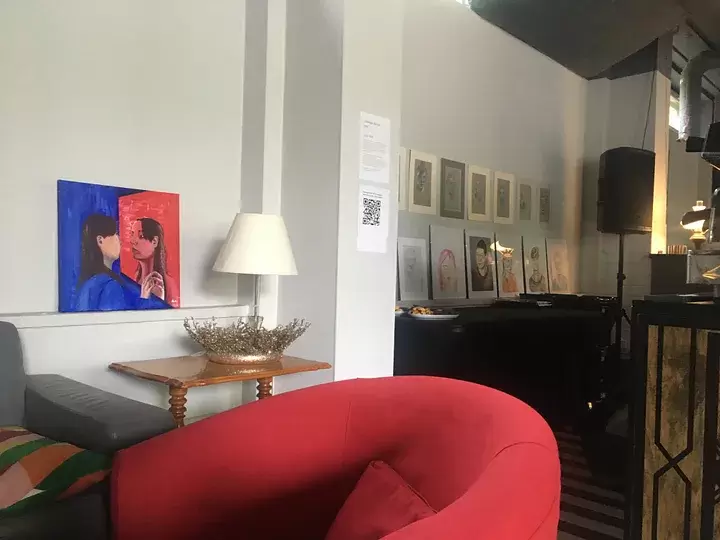 Zapraszam do Klubokawiarni Pożytecznej na al. Niepodległości do piątku 12/05/23.
(P.S. Nie zapomnij zeskanować kodu QR.) **** Despite all attempts to sabotage the show and my health by different forces, it was very rewarding to meet the people who were interested in my work and for the first time receiving this support from the public. As planned works sold as digital collectibles were shown to a wider audience. People were particularly impressed by the expressive nature of the works and the emotional resilience captured in the sitters. The works from “States of the Mind” were also popular. I’m pleased the show was small and didn’t cause a controversy. It was definitely a success. The works are available for viewing till Friday 12/05/23 in Klubokawiarnia Pożyteczna al. Niepodległości 135 in Warsaw. P.S. don’t forget to scan the Qr code.
0 Comments
Protesty i zamieszki wywołane przez ruch „Black Lives Matter” zaczęły się w Ameryce i przez Wielką Brytanię, dotarły aż po różne rejony Europy. Wystarczy przeczytać informacje n stronie internetowej ruchu, aby zauważyć, że nie jest to walka o równouprawnienie czy reformę policji.
Jak tłumaczy James Lindsey i jego zespół akademicki, który od lat bada ideologię, jaka stoi za organizacją, jest to grupa oparta na Marksistowskich ideach, gdzie klasy ekonomiczne zostały zamienione na grupy tożsamości społecznej. Ta organizacja działa na zasadzie sekty. „Teoria konfliktu, w skrócie, to pogląd, że społeczeństwo jest podzielone na różne grupy lub klasy (dla Marxa były to klasy ekonomiczne, dla marksistów tożsamości [Woke], są to grupy społeczne – klasy tożsamości) - te, które stosują represje po jednej stronie oraz te, które są represjonowane po drugiej stronie. Są one między sobą z tego powodu w konflikcie. Innymi słowy, teoria konfliktu to wierzenie, że różne grupy w społeczeństwie toczą wieczną walkę między sobą o władzę i dominację i że zamiast pracować razem w złożony i dynamiczny sposób, który jest obustronnie korzystny, toczą wojnę. Mieć krytyczną świadomość to zdawać sobie tego sprawę z tego, że w pewien sposób jest się w tym osobiście współwinnym tworzenia materialnych warunków tej wojny i trzeba się „bardziej postarać” [”do better”] albo poprzez wyrzeknięcie się swojej dominacji (jeżeli jest się w grupie dominującej) albo poprzez wszczęcie rewolucji (jeżeli jest się represjonowanym).” Ruch wymaga zmiany całego poglądu na świat na taki, który nie uznaje prawdy, jedynie odczucia i dynamikę władzy. Ten, który kontroluje narrację, ma władzę. Marksizm tożsamości czy też „Wokeness” nie dotyczy tylko rasy i nie jest tylko reprezentowany przez „Black Lives Matter”. Poza ideą, że każdy biały przyczynia się i czerpie korzyści z rasizmu (i nic nie może zrobić, aby przestać być rasistą, jedynie może stać się ‘dobrym’ rasistą) są też hasła typu „każdy mężczyzna przyczynia się do i czerpie korzyści z mizoginii” czy „każdy człowiek hetero przyczynia się do i czerpie korzyści z homofobii” czy też „każdy człowiek, który identyfikuje się z płcią urodzenia, przyczynia się do i czerpie korzyść z transfobii”, a ruch ma wpływy na uczelniach, gdzie publikuje rozprawy, i w mediach. Działa na zasadzie sekty, która przez lata wsysa członków, zaczynając od inicjacji poprzez indoktrynację, a kończąc na reprogramowaniu. Więcej informacji na www.newdiscourses.com Źródło cytatu: https://newdiscourses.com/2020/06/cult-dynamics-wokeness/ “Teachers said that it wouldn’t work that there’s no way it can work. They said that people like us would never reach success with our art that we are sentenced to misunderstanding, alienation, loneliness. Before we even started they assumed our failure, and the more they discouraged us the more we fought for success. Isn’t that a beautiful paradox? What a fucked up paradox. We are self-taught and all your polished formulas… we prove them wrong. Somewhere deep within us there was a spark, a seed that despite the adverse conditions grew and bore a fruit. Teachers probably forgot that art is not a cold abstract but a creation of flesh and blood, which can touch your soul if you are sensitive enough. Did you miss us, friend? Because we missed you.” (Prologue, (c) Avi and Louis Villain)  Avi and Louis Villain skilfully manoeuvre my city. They revel in the world of high art and literature, through nightlife and battling poverty with crime only to exit into the world of mental health hospitals and drug use that has long stopped being just for fun. Add to that hip hop’s trademark confidence we took from American hip hop with an added dark undertone particular of Warsaw rap.
More than anything they capture the struggle and ambition of an artist that takes his craft seriously and suddenly the world of a Hip Hop artist and a traditional painter are not so different. Who knows maybe one day there will be a street named after them. Original text from prologue (c) Avi and Louis Villain: Nauczyciele mówili, że to się nie uda, nie ma prawa się udać Mówili, że tacy jak my nigdy nie przebiją się ze swoją sztuką, że jesteśmy skazani na niezrozumienie, alienację, samotność Z góry zakładali nasze niepowodzenie, a im bardziej nas zniechęcali, tym bardziej nam zależało Czyż to nie piękny paradoks? Cóż za pojebany paradoks Jesteśmy samoukami, a te wszystkie wasze szkolne formułki... Jesteśmy zaprzeczeniem tych formułek Gdzieś w środku nas pojawiła się iskra, nasionom, które pomimo niesprzyjających warunków zakwitło i wydało owoc Nauczyciele chyba zapomnieli o tym, że sztuka, to nie zimny abstrakt, ale twór z krwi i kości, który, jeśli jesteś na tyle wrażliwy, może Cię dotknąć Tęskniłeś przyjacielu? Bo my bardzo 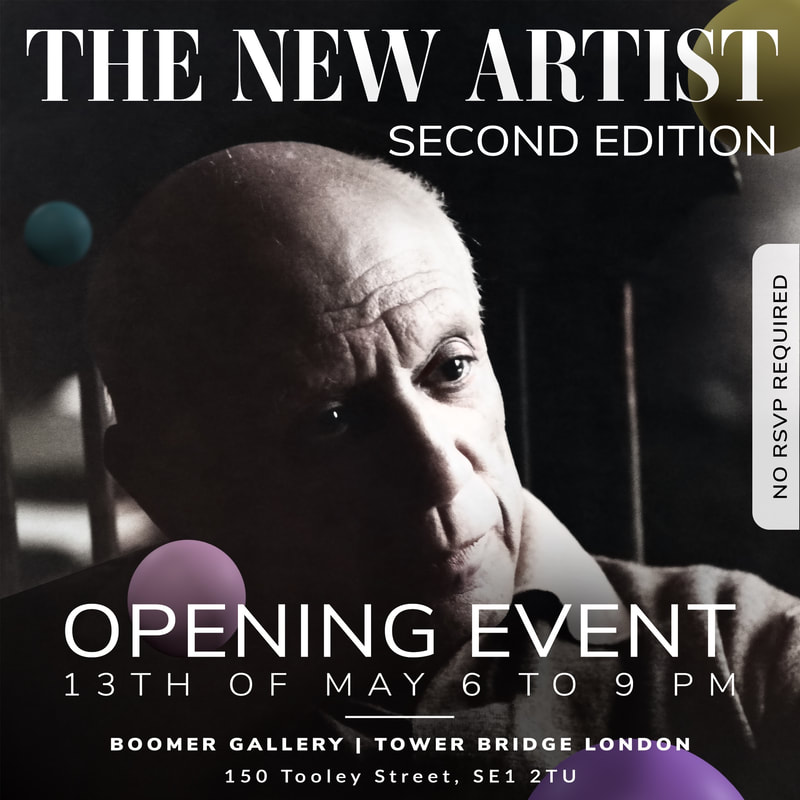 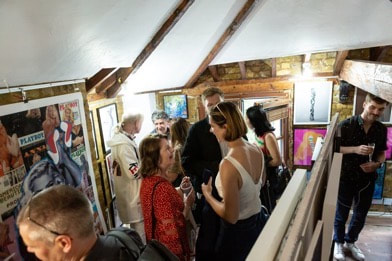 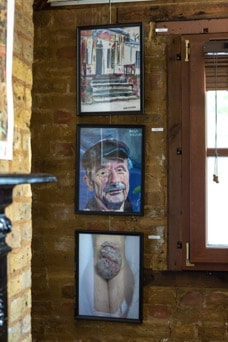 Last week I had the pleasure and privilege to show my works at the Boomer Gallery in Tower Bridge in London. 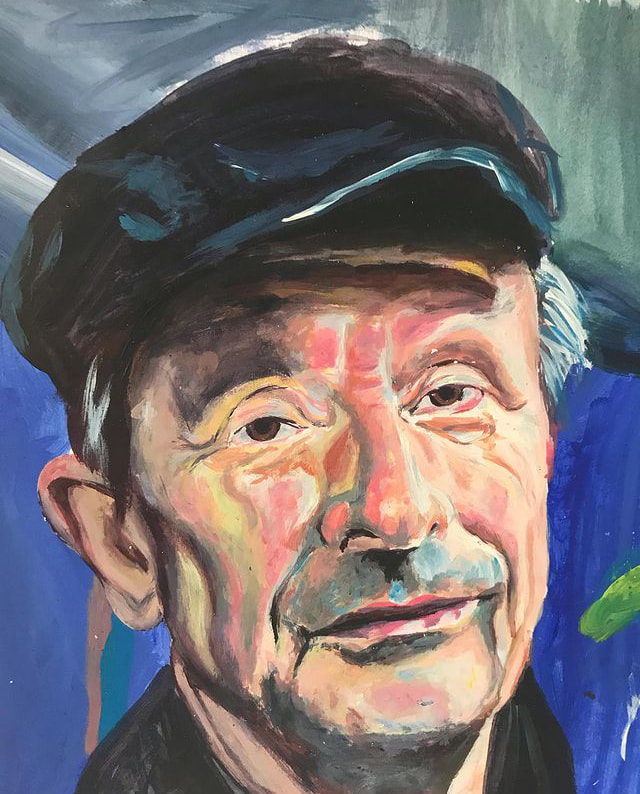 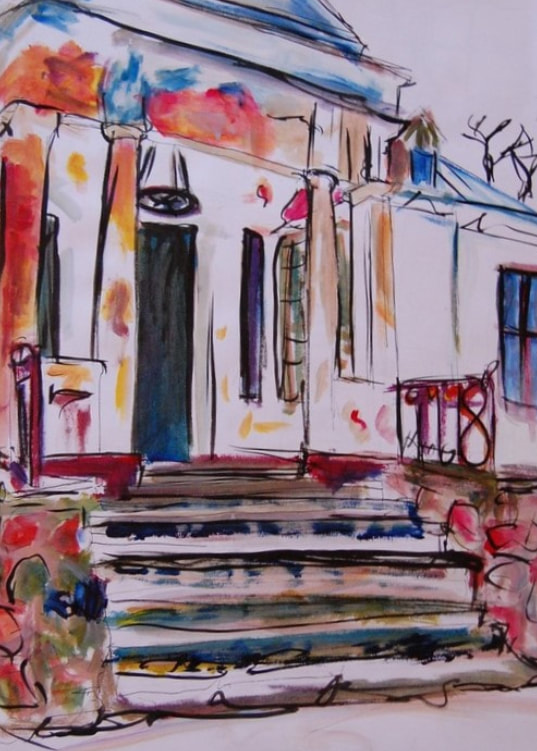 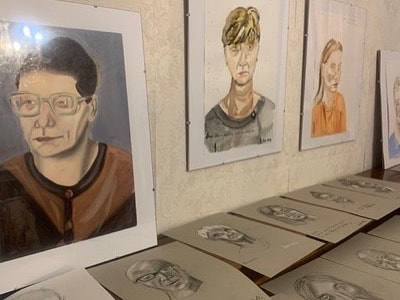 My first solo show was a great success. The main theme were the "Courage to be myself" portraits of my friends from hospital. Emilka, one of the sitters, sang for us. Andrzej Kalemba recited a poem he wrote about her, as well as some of his other poetry. I also showed some of my other works, and allowed guests to have access to the studio to see works I'm currently working on. The show raised awareness and visibility of mental health among our friend group. Many realised a lot more people will reach for help for their mental health then they knew, as it is something so private. I got particularly good feedback on the text that came with the portraits, where I asked individuals what mental wellness meant to them, 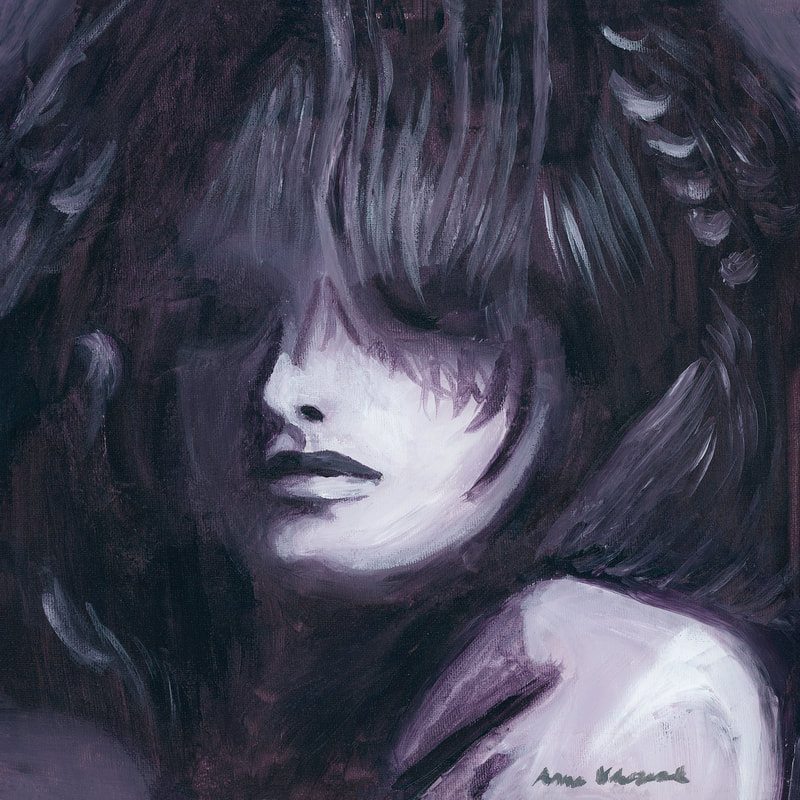 This blog post was a long time coming because I wanted it to be truthful, which as discussed in previous posts, can be hard when discussing something as intuitive as one’s art. It bred a rejected draft and the post doubting whether there is even a point talking about art. All sparked by a conversation I had with a fellow artist Sophie Sturdevant, who is also fascinated by the female form. 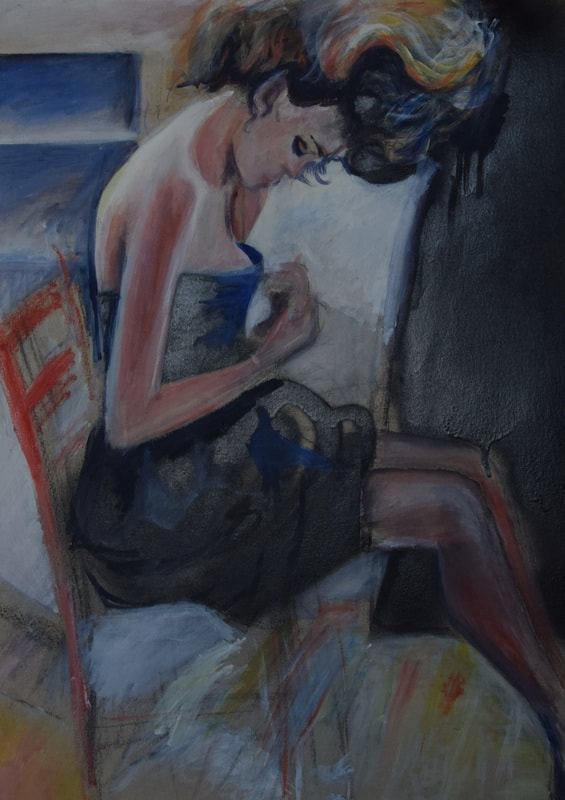 It was much later that I realised what I was trying to achieve with these images based on women in advertising. Advertising, fashion, often mistakenly deemed as shallow and trivial, rejected as vulgar and narcissistic by the ideals of the USSR. The feminine criticised as dumb and vain by misogynists never truly captured by feminist movements focused on simply allowing women to survive. 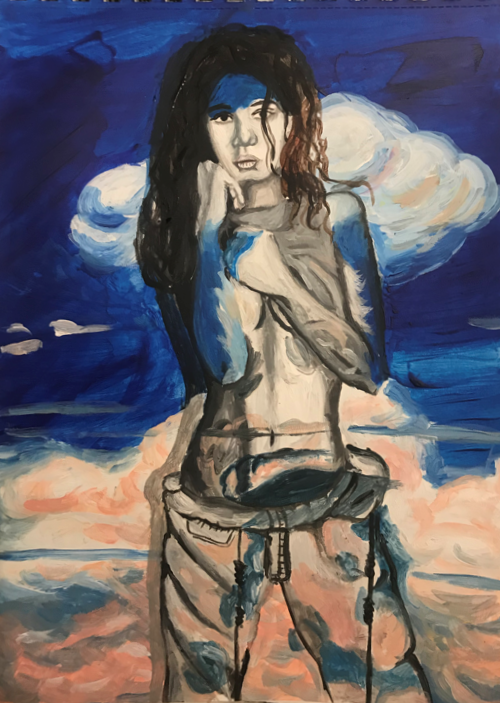 But there is undoubtedly substance in beauty, in the unconditional love and care, in the deep emotional intelligence and range, in the sensitivity that only the woman can give, that she was made for by biology, by nature, god or gods in equipping her for her many roles, among them the forever rejected by modern society role of motherhood. 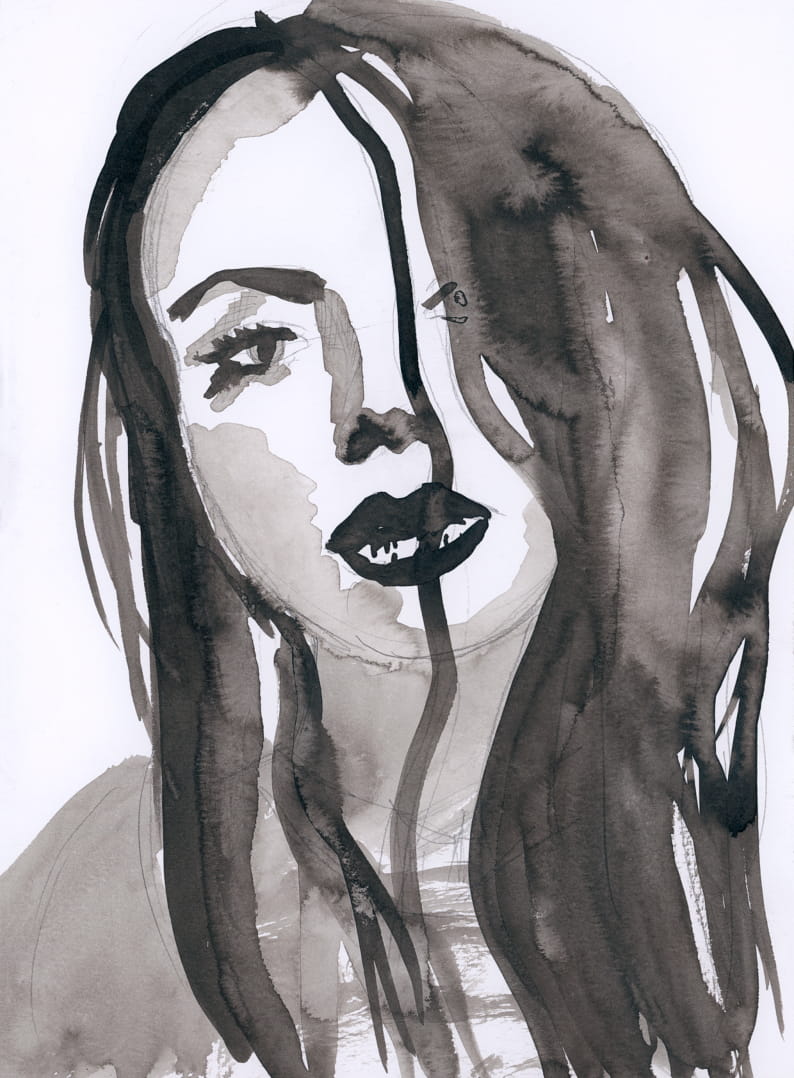 Women celebrating the true nature of womanhood in its full unapologetic unconditional delicacy in their art or music are often criticised as not true feminists (Lana Del Rey) or dismissed as lacking depth (Taylor Swift). Women who look at the traumas the woman faces in the modern world in their art are criticised as lacking class (Tracey Emin). 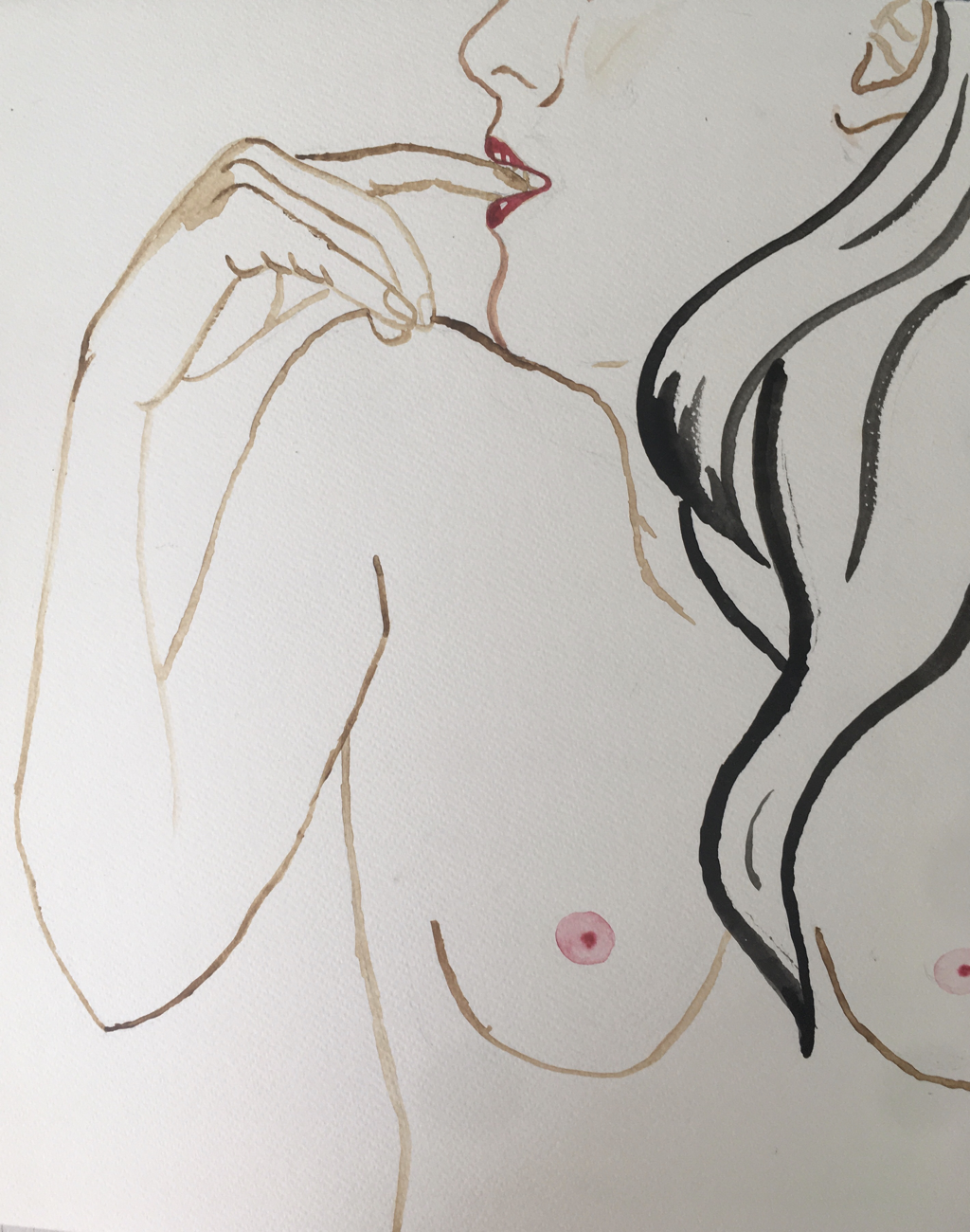 And it goes beyond that. Men capable of understanding, living and feeling the feminine suffer either active persecution or are faced with the same tiresome stereotypes women are whether heterosexual, trans or gay. It seems the hatred goes deep into the imbalance in our society between the feminine and masculine. I think for me though it was always a personal journey - growing up in environments where I saw mainly toxic versions of feminity, I rekindled it later in life and developed a fascination with what it means to be a woman. 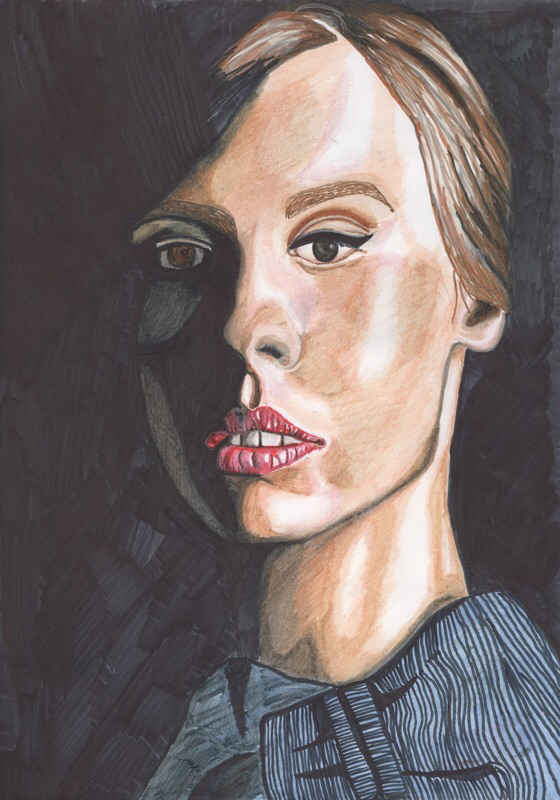 Luna: How does an artwork start for you? Do you have an idea of what it will look like before you start? Pyra: Most frequently, I have a sensation come upon me which begins to form a visual in my mind. A sort of synesthetic output to sensorial input. It never ends up just how I might envision it, though. It takes on a life of its own as I am in the process. L: Your art is deeply spiritual and ridden with symbolism. At times unnerving. Are your symbols purely intuitive? P: I would say they are purely intuitive. I often complete a piece and end up surprised with the things I see in it. Perhaps it's all a reflection of the unconscious. 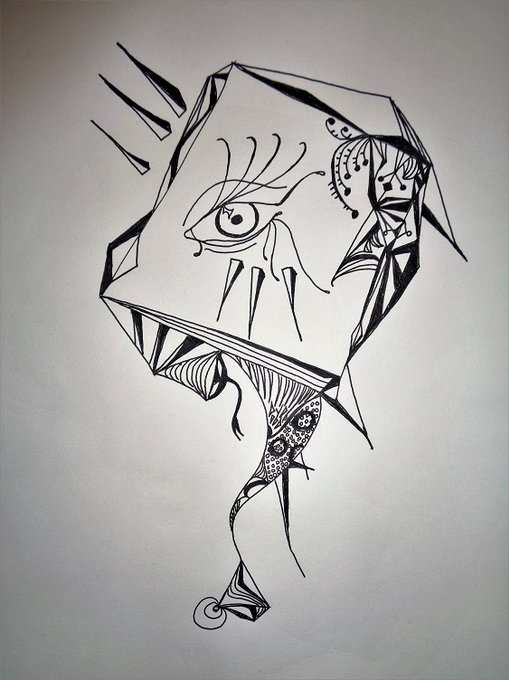 L: I often see the symbol of the eye in your work, does this carry special meaning to you? P: In a way, yes. I can't quite explain why though. It just sort of happened, and then continued to happen, and now it follows me. I do have my interpretations of it, of course... I'm hesitant to talk about those because I think what others take it as is more essential. L: You’re inspired by Austin Osman Spare and are an occultist yourself. Do you use any techniques such as automatic writing and automatic drawing when creating you Art Grimoirs? P: Absolutely. Portions of those works are entirely automatic in nature (and that makes its way into a great deal of my work). Sometimes I even work with my eyes closed, or in a dark room. There is an element of trance to it as well, which I distinguish as holding a bit more alertness. Of taking on the suggestion or energy or mood associated with a subject. In that facet of the process there are things which arrive into my mind's eye (some consider this the psychic mind, others who don't believe in that may simply view it as random thoughts.. I don't find it to be random, personally). Sometimes it's a scene playing out, or symbols. As soon as they come to me, I understand how they fit, but I wouldn't be able to explain where the understanding comes from so easily. L: Do you ever create art as part of a magic ritual? P: Yes, very frequently. And that is an interesting subject, art holds a prominent place in ritual and magic through many traditions. Sigils are a common example, also effigies, and various tools which may bear etchings of relevant images to a certain ritualistic purpose. All of this is art, but perhaps not as commonly seen as such at first glance. Ritual itself is art. But I digress! When it comes to painting in particular, I have done that for sure. One could see an artist's entire career as a ritual to meet a certain end, in that creative stimulation and release. L: You don’t have to answer this but what branch of the occult do you practice? Is there any being you feel particularly close to or inspired by? P: I have practiced in many areas of occult interest, and don't like to confine myself to one arena when I can explore the knowledge of many. Some might consider me a form of chaos magician for that reason, but that would take some further dissecting. I feel closest to the Dionysian; there's an emphasis on the wild and primal aspect of magic for me drawing from ancient Mystery traditions through to more modern folk beliefs. Our duality is at the forefront there, and duality inspires me. 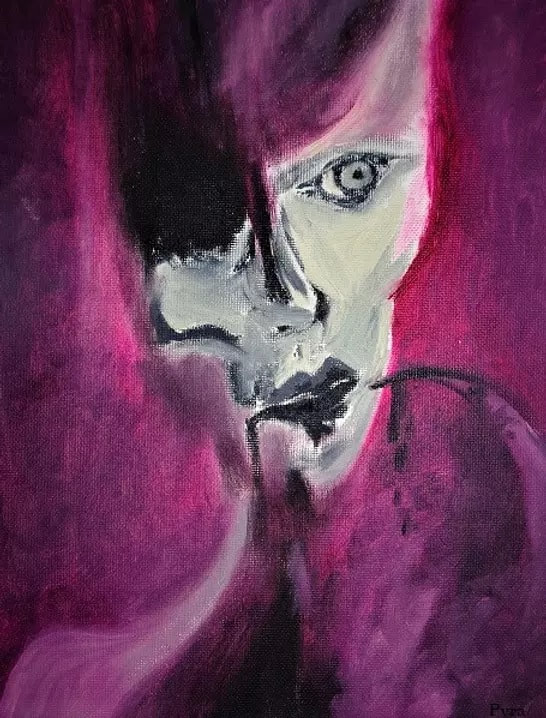 L: What gave you the idea for the inner demons project?
P: I began painting the shadow side of subjects several years ago on commission, that came naturally from a great interest in extending upon and spreading the kind of cathartic experiences I've had with surrealist and gothic literature. I wanted to bring that phenomenon into a visual place. With time this evolved into the Inner Demons project by fusing my interest in harnessing and depicting that, with my desire to be involved in raising mental health awareness (a passion of mine for a very long time). I thought, in a sense that I'd already been doing this, and that I loved doing it and wanted to make it into something more. I wanted to transform the art into a platform from which I could tackle the kind of causes that I haven't been able to otherwise do much about. It's a culmination of passions finding each other in the right way at the right time. L: Again you don’t have to reveal this, but what is your attitude to demons? P: I think the worst kind of demons are those that are repressed and locked away inside of us to the point of self-destruction. The religious idea of the demonic, meanwhile, I believe is skewed. It's easier for some to blame otherworldly forces for the terrors we inflict upon ourselves and others. You can look and read more about Pyra and her work on her website. Images courtesy of the artist. Over lockdown I deleted all my social media sites, but later decided to come back and this time use them in a more focused way. I found someone who helped educate artists how to reach their audience. She advised me to write some more on Gia and my later interest in the female form in fashion and advertising. Later that night I was thinking about this while out with my friends and wrote a long blog post which I never posted.
I never posted it because it simply wasn’t true. I wasn’t thinking of all those things when creating something as intuitive as art, as much as I wouldn’t mind someone seeing my eastern block culture or experiences as a woman being of relevance. Later I was talking to an artist friend on Twitter who despite being a very accomplished artist never wrote more about his work than the following sentence: “Jason May is a self-taught artist living and working in …..” Today I was listening to a podcast by my Spanish classmate which really helped me verbalise the frustration artists feel when being asked to tell people what to see in their work. Her site is called My Pink Bananas and everyone’s immediate question is: “why bananas?” At first, she would invent meanings, but the real answer is simply “because”. Karina talks in her podcast about miscommunication particularly of the verbal type. We often misread the other person’s intentions based on our own subjective experiences. The CSJ movement, which (thank God) hasn’t really arrived in Poland, encourages us to misunderstand each other in this way which is particularly what I don’t like about it. This however, is something we have all been guilty of even before this influence. Art existed long before written language and is a much more effective method of communication than anything ever written about it. Perhaps this is why I’m drawn to it because I’m definitely often guilty of miscommunication and either misreading my intentions or having mine misread. The truth is my art, like for most artists, is intuitive, there is no clear intention behind it, simply to express. Express and communicate in a more effective way than words. Links: Jason May My Pink Bananas The Critical Social Justice movement has now reached dominance in culture and politics. First it started affecting academia, and in art it is mainly expressed though neo-conceptualism. From personal experience on my Art Foundation, this was the easy answer for people who couldn't draw and didn’t have any talent, but had carefully cultivated a strong sense of being wronged by the world and wanted to have the benefits of being an artist without having to do the work necessary to create something of value (I'm not saying there aren't talented neo-conceptualists). Critical Social Justice is now the main political agenda and anyone who dares contest it is labelled as some sort of dangerous extremist. This is to hide the clear extremism and toxicity of Critical Social Justice derived from post-modern ideas and weaponized with conflict theory. Any objection or discussion would provide an antidote to the poison, so it cannot be allowed and is cause of great rage. I wanted to analyse the emotion and psychology behind all of this by looking at work by someone whose art I overall like. Her apt social critique and deep understanding of trauma is what made her so successful and inspired hoards of talentless CSJ copycats, who talk like Joey from Friends in the episode he learned how to use a thesaurus. Right from the beginning, as clearly visible in culture and academia, it was a way of crashing the party for people who lack talent, academic rigour and initiative. It is often used as an excuse to discredit and destroy more talented competition (and in fact this blog post is inspired by a talented photographer friend leaving Twitter due to attempts to destroy him by these people). Their art often doesn't even try to hide these intentions. 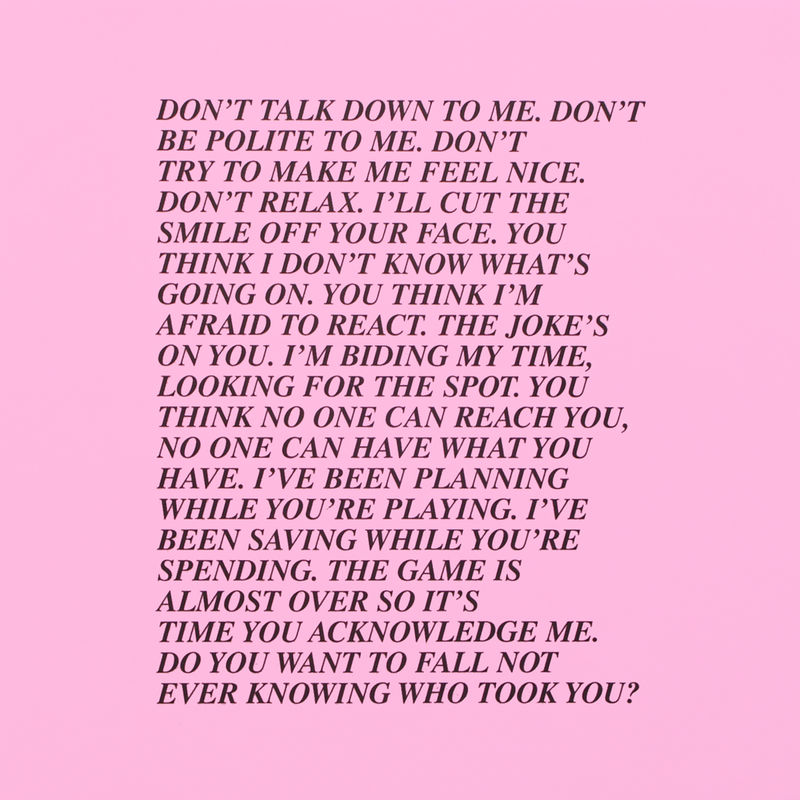 In my angsty, self-pity days I could actually relate to some of Jenny Holzer's inflammatory essays, most of it is Third Reich like level of nourished, conscious, revelled in, laboured, and often justified by disgusting doses of self-pity, immorality, not to use the word "evil". The image below, for example, is something I sometimes felt, while misunderstood by my host culture and peers, torn by a miscarriage of justice, a personal tragedy in the family at a very young age. Wanting to make them suffer the same as my family and culture did, suffer the realities, desperation and cruel aggression of the poverty both material but also spiritual, emotional, social and cultural my country still struggles with today, but also the personal injustice I suffered. 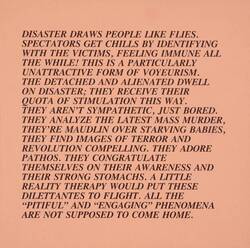 While these emotions happen and acknowledging them can help you deal with it, and art about them is important, feeding this way of harbouring rejections and plain misunderstandings is what creates and drives organised hate groups such as incels for example. So it is ironic the group that is busy calling everyone and everything a hate group, is in fact driven by the same psychology as most hate groups. At the end of the day, nobody actually owes you their sympathy, time or understanding, it is down to you to make yourself understood – a beautiful, fulfilling and liberating process. Not only is it very tragic to deny oneself that, this is how change is achieved. 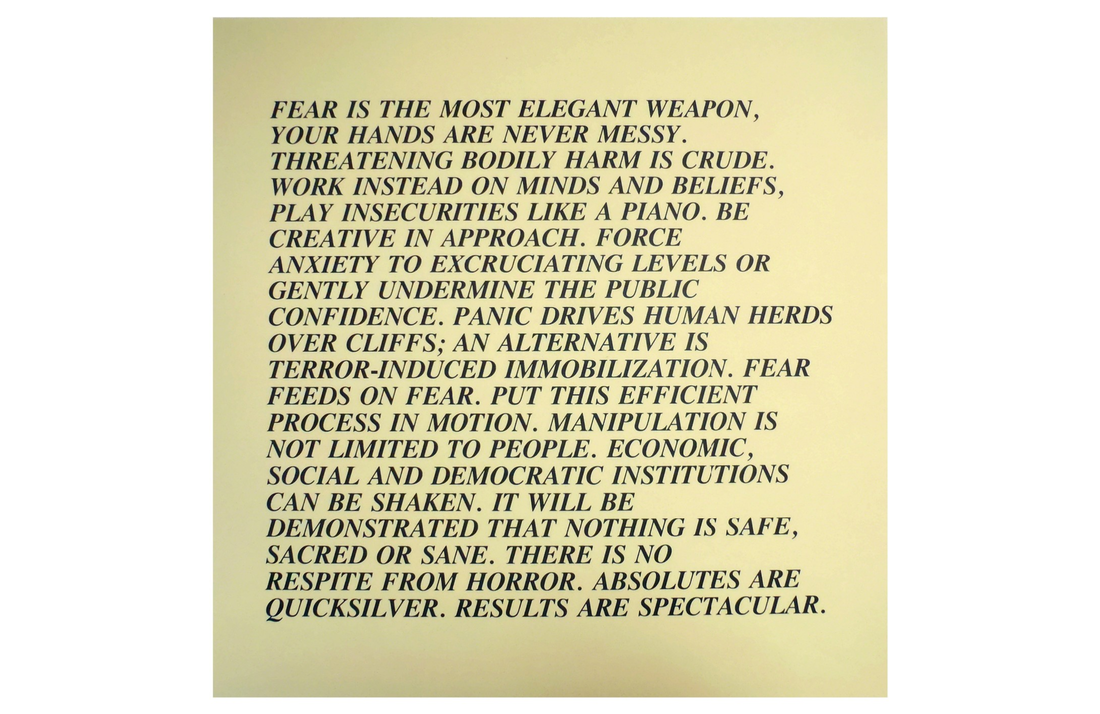 This particular essay along with most others really makes the deep psychological trauma which instead of being attempted at healing is being harboured and watered daily until it grows into fantasies of tyranny.
Sparked by real injustices, so well understood by Jenny Holzer, then offering tyrannical responses she accurately describes - ironic as tyranny is the cause to the pain described. But who says art has to be moral. Saying that, I saw it more as one does a gangster film, an entertaining release and insight, not so much a call to action. Tyranny breeds tyranny. And I guess cultural and political tyranny is exactly what the Critical Social Justice movement is about. A self-inflicted deep unhappiness, the result of self-indulgent nourishing one’s self-pity, anger and laziness in order to later justify monstrous, unjust and unjustifiable, tyrannical acts be they on a personal or mass level. Instead of getting justice, become like the monster who did this to you. And if your wounds are barely unintentional scratches, just pick them until they get infected, because no one could ever possibly understand, and even if your grievances are completely illegitimate - jump on the bandwagon, tyranny is fun once it's justified. Which is fine if it wasn't the praised and default moral stance to hold today. I'm going to write about the role of untruths in modernism and post-modernism, and art, but first I wanted to think about it from a more political perspective.
The universal truth – the assumption “My ball is purple, therefore all balls are purple, and so is yours” This assumption of the universality of a concept is not new and it has been used as a justification of oppression and genocide for centuries from colonialists, missionaries and other fanatics. The arrogant assumptions of certain powerful people that they have the answers and they are in fact relieving those they oppress or harm. The basis of this is their inherent belief that they know best based on their arrogant assumptions. This is often how they gain their power in the first place, maybe they gathered a crowd of people all with a purple ball each by now and they believe they are sent on this earth to “help” you discover the universal truth about your red ball. The subjective truth – the lie “Your ball is purple to me, but it can be red to you” In this scenario, in order to maintain peaceful oppression, the dual truth is invented. Only one can be true, but only one can have weight. Admitting to a lie would mean losing control. The denial of truth – the silencing “Your ball doesn’t exist, only our differing perceptions of it are real” Here, truth is completely erased, words denied from the oppressed, with the hope history will cease to exist, all in order to achieve complete control of every aspect of reality. “The denial of truth effectively robs us of the capacity to speak; of the capacity to understand; of the capacity to judge.” (Jeff Malpas). Now the oppressor can murder in broad daylight and it never happened. |
Here you can see updates about what I've been up to. Archives
June 2023
Categories |